Showing posts with label exotic oils. Show all posts

Frankly Speaking Friday- Exotic Oils cont.- Wheat Germ Oil

We are finally at the end of the Exotic Oils series! The last one being Wheat Germ Oil. Now you may think that it is not all that exotic, but I hope to change your mind about it! So off we go....


Wheat Germ Oil, botanically known as Triticum vulgare, is an amber, brownish, to amber, pale yellow, depending upon whether or not it is refined. If it is unrefined it will posses a heavily nutty scent and taste, but that is not as pronounced if it is a refined oil.  This oil is cold pressed, and extracted from the germ of the wheat kernel, which, incidentally, only makes up 2 1/2% (by weight) of the kernel. The germ of a any cereal is the reproductive part, the one that germinates and grows into a plant, so it is the embryo of the seed. The oil in the wheat germ is what nourishes the plant embryo as it develops into a full grown plant. 


This oil is suitable for food or cosmetic use, but only for those without wheat or gluten allergies. It is an unrefined oil, and naturally contains high amounts of vitamins A, D, and E. It also contains vitamins B1, 2, 3, 6 and even vitamin F. It is also rich in essential fatty acids, (over 96%) proteins and minerals. Because of its richness, and because of the resulting regenerative and anti-oxidant properties, wheat germ oil is another wonderful addition to your cooking and your skin-care products.


On the skin, wheat germ oil serves as an emollient and natural moisturizing factor. Natural moisturizing factors mimic the function of healthy skin. They provide lubrication to the skin's surface, while they prevent the evaporation of moisture from the skin. Wheat germ oil also helps to stabilize the skin's inter-cellular structure, which prevents any surface irritation from going deeper into the skin. It also helps to keep bacteria out of the skin and bolsters the skin's immune and healing systems. In fact, a product called the Invisible Glove only lists three active ingredients, and one of those is wheat germ oil (benzoin extract and vegetable oil are the other two ingredients). The Invisible Glove is used to protect skin against chafing, irritation and dryness, and to protect hands from solvents and detergents. Nurses, outdoor workers, military personnel and bartenders, according to the product information sheet, use it as a barrier cream, applying it like a lotion before work.


As previously discussed, essential fatty acids are needed for our overall heath, and the health of our organs (skin is the largest organ we have). They are not produced by our body, so we must get them from dietary sources. Wheat germ oil is a simple, great dietary source. It can be taken alone, drizzled on top of salads, vegetables, pasta, pesto, or many other meals, just don't heat it or you will destroy all the great properties you are trying to get!


The essential fatty acids in the wheat germ oil will provide for health of the cardiovascular, immune, nervous, and reproductive systems, as well as the general health and maintenance of cells and bodily functions. It is, though, the vitamin E present in the Wheat Germ Oil that promotes skin cell formation, and is wonderful for nourishing and rejuvenating dry, mature, dehydrated, sunburned,  and damaged skin, as well as, reducing scars and stretch marks. It also has anti-inflammatory and anti-oxidant effects, which may be beneficial medicinally as well as in your cosmetics. In addition to those already mentioned, wheat germ oil has been shown to be effective for the treatment of; cracked skin, eczema, psoriasis, tired and overexerted muscles, poor blood circulation, high cholesterol levels, and poor lymphatic function.


Generally speaking, wheat germ oil has a shelf life of anywhere from 6 months to 18 months, depending upon how its stored, and whether or not it is refined.
Because of its high vitamin E content, which is a natural antioxidant that  helps to prevent rancidity, this oil is often added to other carriers to help extend their shelf life, but on its own, wheat germ oil, especially the unrefined  oil, is very sensitive and will degrade quickly when it is exposed to extremes. This means that any fluctuation in temperature, light, or oxidization (which means exposure to oxygen/air) will adversely affect this oil, therefore it is better to keep it refrigerated. Many manufacturers prevent rancidity by storing the wheat germ oil in vacuum sealed glass containers because the glass prevents oxygen from passing through it like plastic containers. So storing your oil in a dark, glass bottle, with as little air space as possible, may be the best storage technique. However, some of the refined wheat germ oil I have come across now appears to have stabilizing additives, so you will need to double-check the recommendations of your oil's manufacturer. 


Remember, a good quality wheat germ oil will be viscous (thick) and fairly deep in color. The unrefined oil will also have a very noticeable taste and odor. For these reasons you will need to consider its usage amounts in your formulas. While it has great skin benefits, it is not really practicable to have a 100% wheat germ oil massage oil. But, I think that you will find that an  incorporation rate of 10-15% will provide all the awesome benefits of this oil in a manageable consistency. It is recommended that you use it between 5-15% in lotions and creams, 5-10% in balms, 5-8% in hair conditioners, and 5-10%   or one ounce ppo in bar soap recipes. While some of the good stuff won't survive the heat of saponification, many believe that some of it will. Given the cost of this oil though, you may wish to save it for your other cosmetic formulations. :) 


One more thing about wheat germ oil, it is also a great dietary supplement for your pets! It promotes a lustrous coat, as well as healthy skin. You can simply mix a few drops of it in with the pet food. Studies have shown that dry skin and dandruff are greatly reduced in pets, and this includes livestock. Some even claim that it has helped with their animal's dry, cracked skin, eczema, and psoriasis.     


. 


Teaching Tuesdays - Exotic Oils Cont.- Tamanu Oil

Tamanu Oil, botanically known as Calophyllum inophyllum and/or Calophyllum tacamahaca, is a light green oil with a rich, deep odor. The oil is made from the odorless, pale kernel, called punnai, that comes from the fruit of the Tamanu tree. The Tamanu tree gets beautiful, fragrant, white flowers twice a year. Later these flowers yield clusters of yellow-skinned, spherical fruit, its pulp tasting similar to an apple. Inside that fruit is where the nut is found, and inside the nut is where the kernel is found. Once harvested, the kernel is dried out in the sun for two months, where it becomes quite sticky with the dark, thick, rich oil that eventually becomes Tamanu oil. While the kernels are drying they must be protected from the rain and from humidity, so this can be a labor intensive few months. Once they reach the proper stage, the sticky oil is then cold-pressed to make the greenish yellow oil, similar in appearance to olive oil, that we know as Tamanu oil. It will take 220 pounds of the Tamanu fruit, which is about what one tree will produce annually, to yield just 10.4 pounds of cold pressed oil. This yield disparity is an important factor in the cost of this exotic oil. Currently that price is running at $130.00 per liter, and a liter is about 33.8 ounces, so that is roughly $3.85 an ounce. Not as high as some essential oils, but a lot when you figure how much oil goes into some products! 

The Tamanu tree is indigenous to tropical Southeast Asia, and is found in Thailand, Vietnam, Myanmar, Malaysia, South India, Sri Lanka, and the Melanesian and Polynesian islands. Historically, natives believed that the Tamanu tree was a sacred gift of nature, with gods hiding in its branches. This tree was their answer to skin protection from the ocean winds, high humidity and hot sun. As far back as the 18th century it has been documented that native Jamaicans used Tamanu oil to treat sores and wounds.  

Today, Indonesians soak the leaves in water, creating a blue solution that they give internally in cases of heat stroke. They also use this solution to (topically) treat inflamed eyes.    
In New Guinea the leaves are softened by heating over a fire, then they are applied to skin sores, ulcerations, boils, cuts and pimples. 
On Dobu Island the leaves are boiled and the solution is used to wash skin rashes.
In the Phillipines they soak the leaves in water and use the solution to treat hemorrhoids. They mix the sap with sulfur and make an ointment that they use on open sores, wounds, and boils.  

Fiji natives use Tamanu oil to treat  joint pains, arthritis, bruises, oozing wounds, chapped lips and even to preventing diaper rash. In the 1920s, Sister Marie-Suzanne, a nun stationed in Fiji, topically applied Tamanu oil to leprosy victims with positive results.
In fact, in most south sea islands it is utilized as an analgesic for sciatica, rheumatism and ulcers.
Pacific islanders apply Tamanu oil to scrapes, cuts, burns, insect bites and stings, acne and acne scars, psoriasis, diabetic sores, anal fissures, sunburn, dry or scaly skin, blisters, eczema, diaper rash and herpes sores--and even to reduce foot and body odor!

 Tamanu oil has anti-inflammatory properties, accelerates healing, promotes new tissue formation and healthy skin growth, reduce rashes, treats sores and abrasions. It’s pain-relieving properties have also been used to treat and relieve the pain of neuralgia and shingles. 

In fact, in Europe, sometimes called Domba oil, tamanu oil has a proven 70 to 75 percent success rate in alleviating rheumatism and scabies.  It’s also proven  effective as a gout and ringworm treatment, and can be applied to lesions of the mucous membranes.  It is known to heal chapped skin, post-surgical wounds, skin allergies, bed sores, wounds, rashes, abrasions, athlete’s foot, boils, cracked skin, and infected nails. It has even healed severe burns caused by boiling water, chemicals and X-rays.  

Tamanu oil possesses powerful bactericide and fungicide agents, and has proven antimicrobial qualities as well. This oil tests well against antibiotics in the treatment and relief of; bladder infections, wound infections, pneumonias, septicemia, conjunctivitis, infected burns, athletes foot, ring worm, jock itch, Madura Foot, urinary tract infections, and the cause of diphtheria. Additionally, Tamanu oil has been used to affectively reduce the appearance of stretch marks and scars. In one study test subjects with scars a year old applied this oil twice daily (and only this oil) for nine weeks. After six weeks there was significant improvement in the appearance of the scars, and after the full nine weeks,  the scar length was reduced by an average 0.28 centimeters, and width was reduced by an average 0.12 centimeters.    

This oil will store well under any conditions, but extreme heat will tend to lessen its shelf life. With proper storage it should last from 10-14 months. Given its high cost, this is probably not an oil that you would want to add into your soaps, but it does make a fine addition to your medicine cabinet and skin care formulary. It does have a pretty strong aroma though, so you will need to take this in consideration when developing your products. Also, the coloring may alter your cosmetics as well, so some experimentation is probably in line. The good news is that this oil is suitable to used directly on the skin, or mixed with other carrier oils, so your imagination is the only limit! 


What's Happening Wednesday-Exotic Oils Cont.- Shea Oil

What's Happening this Wednesday is that we are in the home stretch of the exotic oils series. So today we will be looking at Shea Oil.


Shea butter and shea oil both come from the seed of the African karite tree, better known as the shea tree. The shea oil is actually a byproduct of the butter production, where the fractionated oil is expressed as the seeds are pressed. The liquid oleins are separated from the thicker stearines, leaving a pretty thick oil. 


While many are familiar with the butter, the oil seems to be less known, but it  possesses all of the same beneficial properties of the butter, while having a lower melting point, which makes it easier to utilize in some formulations. In fact, shea oil is actually higher in fatty acids than the butter, which means that it is more moisturizing for our skin. And thanks to the higher oleic acid that it posesses, it also has more ant-inflammatory properties. It also has a higher level of linoleic acid, which allows it to repair the skin's barrier properties faster. It is high in vitamins A, E and F and presents with a deep golden color. Shea Oil provides skin with all the essential elements it needs for good balance, elasticity and tone. It penetrates the skin easily, and forms an environmental barrier, protecting the skin from harsh elements. Of course it also leaves the skin feeling soft and smooth. This oil is a proven skin  re-generator. It improves the elasticity of the skin, and provides relief from dermatitis, eczema, burns, rashes, wrinkles, scars, psoriasis, and other skin irritations. It is also said to promote hair growth. 


Shea oil stores well, lasting about one year, but extreme heat will lesson that time. Just as with the butter, this oil is great for superfatting your soaps, or you can use it as part of your base oils, up to 20%.  


Teaching Tuesdays - Exotic Oils Cont.- Sesame Oil

We are now in the home stretch of the Exotic Oils postings. Today we will be exploring Sesame Oil, and, while great for cooking, there is so much more to this oil! In fact, it has been dubbed as the "Queen of Oils", thanks to all of its healthful benefits. 


Sesame seed oil has been used in western cultures for over 3000 years, and is perhaps best known as a common ingredient in Asian and East Indian cooking. But it's health benefits have begun to come to light in the recent decades, even though it has [also] been used for thousands of years as a popular alternative medical treatment in Ayurvedic and Oriental medicine. Today's research is proving what these peoples seem to have known all along, that, in addition to fatty acids and antioxidants, sesame oil contains vitamins and minerals which are a valuable addition to any health care routine.


Sesame oil is obtained from both raw sesame seeds and toasted sesame seeds, which is the stronger tasting, Asian style oil. There are also variations in the color of the oil. Cold-pressed sesame oil is pale yellow, while Indian sesame oil (gingelly or til oil) is golden, and East Asian sesame oils are commonly a dark brown color. This dark color and flavor are derived from the roasted/toasted seeds, and the cold pressed sesame oil also has a different flavor than the toasted oil, since it is produced directly from raw seeds, rather than toasted ones.
Sesame oil is traded in any of the forms described above, usually the cold-pressed sesame oil is available in Western health shops. Un-roasted (but not necessarily cold pressed) sesame oil is commonly used for cooking in the Middle East, and can often be found in their markets. In East Asian countries, different kinds of hot-pressed sesame oil are the preferred Sesame products, and they are quite flavorful, coming in seeds, oil and paste, which is also known as sesame butter. The Light sesame oil has a high smoke point, and is suitable for deep-frying, while the oil from the roasted seeds has a slightly lower smoke point, and is unsuitable for deep-frying. Instead it can be used for stir frying. East Asian cuisines often use the roasted sesame oil for seasoning. This oil is valued for its long shelf life, and in addition to its medicinal and food uses, sesame oil is also used in the manufacture of soap, paint and perfume. Botanically named Sesame indicum, the oil has a pleasant, nutty fragrance, and an enjoyable, distinctive, taste. With the un-roasted types having a more mild flavor..


Historically speaking, sesame oil has been used as an anti-inflammatory, an antiseptic, a pain reliever in various skin conditions, gum disease, and as a treatment for a variety of other illnesses. It has even been said to help restless sleepers from repeated waking up during the night, when massaged into the feet before bedtime. 


Modern science now proves that sesame oil is a powerful antioxidant and that it is high in polyunsaturated fats, as well as being an excellent source of vitamin E and various minerals. In fact, sesame oil has the fourth-highest concentration of polyunsaturated fats of any oil. 


Polyunsaturated fats are important for cell growth and development, and are especially beneficial to the heart. They are also thought to play an important role in the prevention of diabetes, heart disease, high blood pressure, arthritis, autoimmune disorders, and many other ailments. 


Sesame oil contains 75% of our recommended daily allowance of vitamin E, in just one ounce of its oil. It also contains sesaminol and sesamin, which help to increase the vitamin E activity within the body. Vitamin E is known to help reduce the risk of heart disease, and may even protect the body from cancer.


This oil also contains a high amount of [multiple forms of] B-complex vitamins. These vitamins promote the healthy development of several different systems in the human body. The particluar B vitamins in seasame oil affect our overall energy levels, skin, nerve and digestive health, overall growth and development, blood and immune system health, and even DNA and red blood cell health.


Additionally, many Proteins and Fats are also found in Sesame oil, both monounsaturated and polyunsaturated fatty acids. These fats are high in omega-6, which can help prevent and treat multiple diseases. You will also find a high amount of amino acids, which build up proteins, and a large amount of minerals. Sesame oil contains calcium, copper, iron, magnesium, manganese, phosphorous, selenium and zinc, all of which help to strengthen muscular and skeletal development.


Although the medicinal use of sesame oil is not currently approved by the Food and Drug Administration, studies have demonstrated the clinical usefulness of this oil. In fact, in 2006,  the Yale Journal of Biology and Medicine published a study where the Researchers concluded that consumption of sesame oil (45 days in a row, without other oil use) significantly lowered the blood pressure and body weight in the test subjects. However, there is no suggested dose of sesame oil, so it is suggested that consumption of the oil be done through food sources. This may pose an issue, as the American Heart Association advises that our polyunsaturated fat intake should not be more than 10% of our total caloric intake. And, since sesame oil is pretty high in overall calories, consuming large quantities of the oil is not advised either. Sesame oil, after several studies, has now been recognized for its benefits to lung and respiratory health, along with lowering cholesterol and blood pressure, aiding with the swelling and pain that accompanies arthritis, and even protection from skin and colon cancer. In overseas experiments, sesame oil is currently being used to treat some chronic disease processes, including hepatitis, diabetes and migraines. 

Sesame seed oil has natural antibacterial properties against common skin pathogens, such as staphylococcus and streptococcus, as well as common skin fungi, such as athlete's foot fungus. It is also naturally antiviral, and possesses an anti-inflammatory agent. Therefore, it has many first-aid type applications. When Used after sun or wind exposure, it calm the burns. It nourishes and feeds the scalp, controlling dry scalp dandruff,  and killing dandruff causing bacteria. It protects the skin from the effects of chlorine in swimming pool water. When used before and after radiation treatments, sesame seed oil helps to neutralize the flood of oxygen radicals, which such treatments cause. Sesame seed oil helps joints keep their flexibility, and is frequently used to soothe sore gums, treat athletes foot, nail fungus, and painful joints. As nose drops, sniffed back into the sinuses, sesame seed oil has reportedly cured chronic sinusitis. As a throat gargle, it kills strep and other common cold bacteria. Sesame oil penetrates into the skin quickly, and enters the blood stream through the capillaries and circulates. It penetrates through the tissues to the very marrow of the bone. The liver does not sweep sesame seed oil molecules from the blood, accepting those molecules as friendly. Thus it delivers all of this oils benefits throughout the entire body systems. 


Beauty wise, sesame seed oil is loved by masseurs and beauticians worldwide, due to its anti-wrinkle, antioxidant, softening, hydrating, nourishing and penetrating properties. It helps to tighten facial skin, particularly around the nose, controlling the usual enlargement of pores as the skin ages.  It also has the benefit of neutralizing oxygen radicals, one of the major causes of ageing, and it tightens the facial skin. Sesame is excellent for both oily and dry skin. It helps sufferers of psoriasis and other dry skin ailments.  It is quite handy for protecting baby bums against urine caused rashes when applied to the diaper area skin between changes, and it can also be used to gently remove cradle cap on a baby's head. It has been used to treat dandruff and successfully used to kill lice infestations in the hair of children. Sesame oil absorbs toxins from the skin, leaving it healthy, clean and soft. On top of everything else, it is also has natural ultraviolet ray blocking properties, so apply some before you venture outside. 


In soaps, because of its moisturizing abilities, this is a great addition. If you don't want to use it for superfatting, sesame oil will make a kind of soft bar, so don't use it over 10% in your other base oils.  


Despite sesame oil's high proportion of polyunsaturated fatty acids (41%), it is the least prone of the cooking oils with high smoke points, to turn rancid when kept out in the open. This is due to the natural antioxidants, the high level of vitamin E, that is present in the oil.  As long as it is not exposed to extreme heat, it should last about one year without any specific storage precautions. 


You should be aware though, there does appear to be cross-reactivity between sesame allergens and peanut, rye, kiwi, poppy seed, and various tree nuts, such as hazelnut, black walnut, cashew, macadamia and pistachio nuts. Although the prevalence of sesame allergies in the USA is low, especially relative to peanut allergies, the severity of a sesame allergy should not be underestimated.
While pure oil is not usually allergenic because it does not typically contain the proteinaceous part of the offending plant, avoiding it is always safest, as oil purity cannot be guaranteed. Anyone allergic to sesame seeds should be cautious about using the oil.

*Remember that all references/bibliographies are listed by post date and title, just click on the Reference tab at the top of this page. 

Frankly Speaking Friday- Exotic Oils cont.- Sea Buckthorn Oil

I apologize for the late posting, Blogger was on "Read Only" status for several hours last night and this AM. But here we are! Today we are continuing with the Exotic Oils Series, reviewing the super fruit, super oil, Sea Buckthorn.


Sea Buckthorn, botanically known as Hippophae Rhamnoides, is a small, scrubby shrub, native to Russia,
and the northern parts of China and Mongolia. It produces a fruit berry, which is then used to make the
oil. The oil is made by cold pressing the berry and the berry seeds (although some just use the berries and some just use the seeds) produced by the shrub.A small layer of oil is isolated within a vat of pressed material, which is then vacuumed off and separated as "pure oil". It takes upwards to 10 pounds of berries to produce 1 pound of this oil.


The color of the  Sea Buckthorn oil will depend upon what it was made from. Yellow oil represents a combination of fatty acids that is obtained from the seeds and the fruit. Red to brown oil is obtained from the whole fruit, and contains a wide variety of ingredients. Seed oil is a good source of essential fatty acids, similar to Olive, Almond, Borage and other seed oils, and may be used as a dietary supplement. Fruit oil is similar to traditional herbal medicine used to treat various skin conditions, wounds, ulcers and as cosmetic ingredients, it also may be used as a dietary aid. Either way, it has the consistency and the viscosity of syrup. It possesses  large amounts of Phytosterol, Vitamin E, Beta-Carotene, Anti-Oxidants, and Carotenoid, which are responsible for its success as a skin repairing and conditioning oil. Traditionally, sea buckthorn has been used to treat a wide range of skin ailments. It is known for its nourishing, regenerative, and restorative properties. Superficially, this oil is used to assist in the healing of skin injuries, burns, wounds, eczema, lesions, sun damaged skin, and abrasions. This oil is known for softening skin, regenerating skin cells, moisturizing, and also for its anti-inflammatory properties. Additionally, this oil is great for helping to restore the skin's barrier function, and reducing the transepidermal water loss. Studies are currently being performed to determine Sea Buckthorn oil's ability to combat wrinkles, acute dryness and other symptoms of premature skin ageing.


Aside from being very popular as a skin tretament, sea buckthorn oil has also been studied and tested for internal use, as a dietary supplement. The sea buckthorn berry is the least publicized of all the super fruits, but this tiny orange jewel delivers more than 190 bioactive nutrients, is packed with antioxidants, and offers twelve times the vitamin C of one orange. Studies have shown that its internal consumption helps in promoting blood circulation, in the treatment of colitis, stomach ulcers, and is even a soothing agent for the intestinal tract.


This oil generally has a shelf life of about 6 months, and will solidify when it is exposed to low temperatures, so it should be stored at room temp. In its undiluted, concentrated form, this oil will stain the skin, surfaces and even your clothing, so exercise  caution when using, make sure to spread evenly and to dilute it appropriately. While its use in soap as a base oil would be quite  costly, adding a small amount as a superfatting agent, is both beneficial and  cost efficient.  

Teaching Tuesdays - Exotic Oils Continued- Rosehip Seed Oil

We are quickly coming to the end of our Exotic Oils series, so any requests for another series, or any single post projects will be considered, just leave me a message! Today we will be discussing Rosehip seed oil. 


Rose Hip Oil is extracted from the seeds that are contained in the deep red, berry-like fruits, or hips, of a wild rose-bush. Rosehip seed oil, produced mainly in Chili and Argentina, is botanically known as Rosa rubiginosa (another variety used is Rosa moschata), and is amber in color, with an orangish hue. While it has a pretty heavy characteristic odor to it, if found unpleasant, it can be easily masked with fragrance. Rosehip seed oil is easily, and immediately absorbed by the skin, and it does not leave a greasy residue. The biggest issue with this oil is that, due to its delicate nature, it needs to be protected from fluctuations in oxygen, light and temperature, so it must be stored in the refrigerator. However, when it is cared for properly, it can last for a year to eighteen months. 

Rosehip seed oil contains high amounts of linoleic and linolenic acids, essential fatty acids that are important skin nutrients. It also contains Vitamins C and E, which promote healthy skin, and vitamin A, bio-available trans-retinoic acid, which helps to delay the effects of [skin] aging, assists with cell regeneration, and promotes an increase in collagen and elastin levels, which results in firmer, smoother, more elasticity and more youthful looking skin. Rosehip seed oil has been used successfully to treat; Stretch marks, UV damage from overexposure to the sun, Scars from surgery, burns, and acne, Eczema, Psoriasis, Wrinkles and premature skin aging, Hyper-pigmentation, Dermatitis, Burns (including those from radiation and sunburns), Age spots, Brittle nails, and Dry and damaged hair.

Rosehip seed oil has only become recognized by the general public as the  amazing oil that it is, in the recent past. But this oil is now believed to be  one of the best, if not the best, oil available for skin rejuvenation and for its anti-aging properties. In fact, there have now been numerous scientific studies completed, and those have produced astounding evidence which support the use of rosehip seed oil in cosmetic applications. This oil is truly a wonderful hydrator, as it penetrates dry and damaged skin immediately.  It is very mild and can be used undiluted on the most sensitive of skin. It can be used straight from the bottle as a moisturizer, or it can be incorporated into creams, lotions, facial or massage oils.  Rosehip seed oil is a pretty inexpensive, and yet, effective, non-invasive product that will prevent and heal damaged skin. It is a must for your formulary! 

Rosehip seed oil is only recommended for external use. It is not, however,  recommended for use on extremely oily, or acne prone skin. If you are at risk of developing acne breakouts because of high sebum (skin oil) production, and/or hormonal imbalances, then rose hip oil may further clog your skin pores. 
If you do not have these issues, but have large pores, rosehip seed oil will solve that issue for you. It will shrink the pores just as effectively as retinol or microdermabrasion! 

ROSEHIP OIL contains trans-retinoic acid, vitamin A, in a natural form. Considering that direct applications of retinoic acid can be very irritating, rosehip seed oil is a far more skin-friendly, and absorbable alternative to the  pharmaceutical form. It is more compatible with our skin cell structures, and safer since the rosehip seed oil does not actually turn into retinoic acid until after it is absorbed, and your skin decides it needs some, so then it converts it.  But, it is this vitamin A content which increases sensitivity to the sun of the newly formed skin cells, which arise due to its action. For this reason, a sun-blocker is a must! Still, rosehip seed oil makes a great treatment oil and a less expensive alternative to regular retinoic acid treatments.

To use Rosehip Seed Oil, simply massage the oil into the affected area, with your fingertips, until it is completely absorbed. Remember, if you are using it during the daytime,  you must place a sun blocker on top of the oil treatment. To reduce scar tissue, prevent and/or reduce stretch marks, attenuate wrinkles and/or age spots, you will need to apply the Rose Hip Oil twice a day, every day, for about three months. This oil will also help to improve burned skin, swollen skin, and dermatitis that results from radiotherapy. It will immediately relieve dry skin and eczema.  


: 

Frankly Speaking Friday- Exotic Oils cont.- Pumpkin Seed Oil

Pumpkin seed oil, botanically known as Cucurbita pepo L. is a versatile oil, one that is becoming increasingly popular as its health benefits are becoming more well known. This oil has been nicknamed "green gold". You can buy it in varying grades, and even from other types of pumpkins are marketed worldwide. Some International producers use white seeds with shells, and this will produce a cheaper white oil. So make sure that you are getting a nice green/red oil. Pumpkin seed oil is edible, and it is cold pressed, the oil being extracted from the seeds of............you guessed it, pumpkins! The good stuff comes from a specific variety of pumpkins, the Cucurbita pepo, which is a pumpkin originating in Austria. This pumpkin seed oil is a specialty of Steiermark, the Austrian province of Styria. Styria is a lush province that is located in the southeastern corner of Austria, which borders on Hungary, Slovenia, and Italy. Pumpkins grow very well in Styria, and her people have become well versed in pressing the oil from the seeds of the pumpkin fruit.

The seeds are first separated from the pumpkin, then cleaned and dried. It takes around 2.5 kgs of dried seeds to create 1 liter of pumpkin seed oil. After drying, the seeds are then crushed and fine milled, creating a seed flour. Water and a little bit of salt is added to the seed flour, then everything is dispersed. The water is necessary to hold the flavor and the oil in the roasting process. This process is done at a very low temperature in order to protect the seed flour from burning. This roasting brings about a typical, roasted flavor, and is responsible for adding a nice taste to this oil.  After the roasting, when the seeds have that flavor, the pressing is then done with high pressure to get the oil. When complete, the fresh pressed oil is stored for several days because the seed flour needs to "rest". Once rested, then the oil is then bottled or canned and ready for distribution.

This oil is quite viscous, with a deep green, to red brown color depending upon the light. It has a mildly rich scent, with a nutty taste. It is an excellent source of essential fatty acids, antioxidants, vitamins, and sterols. In fact, over 75% of this oil is a combination of linoleic and oleic acids. It contains Omega-3 and Omega-6 fatty acids, which are known to promote energy levels, brain function, and overall health and vitality. It also contains high levels of Vitamin E, as well as Vitamins A and C and other vitamins, Zinc, and other trace minerals too. Pumpkin seed oil has a delicate nature though, and it should be stored in a cool, dry area, out of sunlight. Refrigeration will help to prolong its shelf life, but you will still only get about 6-8 months from it. 

While pumpkin seed oil is great for you and quite tasty, it cannot be used as a cooking oil, because the heat destroys the essential fatty acids, destroying its important health benefits. But, since this oil has a nice and rich, slightly nutty taste, a great way to use it is in a simple salad dressings. Try mixing it with just some honey or olive oil. In Austria, the typical Styrian salad dressing consists solely of the pumpkin seed oil and cidar vinegar. But they also use it in deserts, and it gives even ordinary vanilla ice cream an exquisite nutty taste. In fact, there are a lot of recipes for using pumpkin seed oil available on the net for cakes, sausage, salad, noodle salad and much more. You can try it with a  smoothie, or even just drizzled over your freshly cooked meal, right before you serve it. This oil is considered a real delicacy in Austria, and there, they add a few drops of the oil to pumpkin soup and many other local plates. So experiment with it, and see what dishes you can add flavor too! 


Historically speaking, pumpkin seeds, both the whole seeds and the pressed oil, have been used all around the world for healing purposes. They were either applied or consumed for various purposes, which included; the healing of wounds and burns, as a diuretic, to get rid of intestinal worms and other parasites, hormone production, to treat overactive bladder, and for prostate problems. 

It seems our predecessors had it right, because today this oil has been successfully utilized in alleviating, and even in preventing, prostate and bladder problems. It is also currently being studied as a cholesterol lowering agent, due to the phytosterols that are present in it.  
Extraction- Cold Pressed/Unrefined


As previously pointed out, pumpkin seed oil contains many vitamins and trace elements, as well as being high in the omega 3 ad 6 fatty acids. Because of these constituents, this oil is a welcomed addition to any bath and body formula that you may make, especially skin care balms designed to heal wounds and care for burns. Make sure to add this oil in the cool phase of your process. Also, the efficacy of using this oil in cp and hp soaps is a bit of a controversy, since the fatty acids are broken down by heat. Because of this, you may wish to keep this somewhat pricey oil for your lotions, balms, and melt and pour soaps, adding it only when the cooling is well under way.  


Teaching Tuesdays - Exotic Oils Cont.- Plum Kernel Oil

Plum Kernel Oil, botanically known as Prunus domestica, is made in America and several other countries, including France. It is expeller pressed from the hard seed kernels inside the pits of dried plums, which means that it is really prune oil, and it can also be found under that name as well. This oil is edible, and is beneficial in cosmetic formulas as well. It is golden in color, has a mildly sweet, nutty taste and scent, one that closely resembles almonds. It is a fairly stable oil, lasting about one year with proper storage, meaning in a cool, dry location, out of sunlight. Although it is relatively new to the cosmetic world, it is a great addition.

Plum kernel oil is naturally rich in vitamins A, B, B5, and E, as well as 60-80% oleic acid, 15-25% linoleic acid, and anti-oxidants. Its very emollient, and will nourish and hydrate damaged skin, as well as renew the complexion and maintain healthy skin cells. Its properties mean that this oil is will be very beneficial for dry skin, as well as  mature skin. It makes an especially great addition to your lip balm, moisturizing creams, anti-wrinkle agents, cleansing lotions and massage cream formulas. Some even recommend it for hair conditioners and hair treatments.  Plum kernel oil soothes and softens at the same time. It penetrates the skin easily, leaving it feeling very soft, and without any greasy film or heavy/greasy feeling.  


Frankly Speaking Friday- Exotic Oils cont.- Meadowfoam Oil

Sorry, once again flooding in Ohio makes for spotty internet coverage! Here is Friday's post, a continuation of our exotic oils series. this oil, Meadowfoam seed oil, is primarily grown right here in the USA, but it is rather hard to find now, thanks to the Oregon growers collation break up a few years back. If you can find it for less than 5$ an ounce, consider that a good deal! Still, it is quite a nice oil and well worth the money to get it!


Meadowfoam seed oil, botanically known as Limnanthes Alba, is cold expellar pressed from the seeds (which contain 20-30% oil) of the meadowfoam flower. It is a herbaceous, winter annual plant, native to the pacific Northwest, mainly northern California, southern Oregon, Vancouver Island, and British Columbia. The meadowfoam plant received its name because when it is in bloom, it looks like the white foam found blowing on the ocean.


Meadowfoam Seed Oil was actually developed in the 1970s as a replacement for sperm whale oil, when  the sperm whales began to be monitored against endangerment.  In fact, the oil from the Meadowfoam plant closely resembles that of sperm whale oil, and it is recognized for its outstanding oxidative stability. It has since proven to be invaluable in the body care and cosmetic industries, and is also being studied for pharmaceutical and industrial use. It is quite an unique oil, in that it contains over 98% fatty acids that have over 20 carbon atoms, meaning that they are long-chain fatty acids. It also has higher quality triglyceride levels than other vegetable oils, and it has three long chain fatty acids that were previously unknown before its discovery. Another unique feature of this oil is that, despite its high molecular weight, Meadowfoam Oil remains liquid at room temperature, unlike its counterparts. 


Meadowfoam Seed oil is highly emollient, yet it is absorbed very quickly, leaves a lighter feel on the skin than many other oils, and does not feel greasy.  It has amazing rejuvenating capabilities, and is very stable, making it a wonderful oil of choice for a wide variety of applications.


Meadowfoam Seed Oil is said to moisturize the skin and hair better than most oils, and, when applied to the skin, it forms a moisture barrier which will assist the skin in preventing moisture loss. In shampoos and hair care products, it helps to add shine and moisture to the hair and scalp. In lipsticks and lip balms, Meadowfoam Seed Oil helps to revitalize dry, cracked lips and keeps them moist for a longer period of time. It is valued as a lubricating oil, providing good slip in creams and massage oils.  In lipsticks and other makeup this oil provides adhesion, making them stay on for a longer time.  It has a high tolerance for heat, and is suitable for a wide range of applications.

Meadowfoam Seed Oil is one of the most stable lipids (fats) known, having a shelf life of two to three years, and it will lend stability to other oils that are combined with it. Therefore, this oil is quite useful in recipes where you are using less stable oils, such as sweet almond, kukui nut, evening primrose, borage, and hemp seed oil. Use Meadowfoam Seed Oil in lotion bars, lip balms, and other products where you wish to extend shelf life. It is often used as a binder, and is credited with extending fragrances, or helping them perform better than other oils, especially when used in bath salts, soaps and massage oils. Meadowfoam oil creates a very moisturizing bar of soap, when used as a superfatting agent, or when used as part of the base oils, from 10-30%.  

Teaching Tuesdays - Exotic Oils Cont.- Monoi de Tahiti

    • Continuing our exotic oils series, today we are looking at another oil that is really an infusion. This one however, unlike the calendula oil, is strictly regulated for consistency of product. I am speaking of Monoi oil, also commonly referred to as Monoi de Tahiti. This traditional product originates in French Polynesia, Tahiti, and the name "Monoï" is an ancient Tahitian word which means "scented oil."   Monoi has quite a long-established history of cosmetic use among the Tahitian people, and has been put through extensive tests and analysis in recent years, validating long-standing claims and uses for the Monoï.

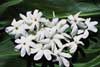
 The national flower of Tahiti, the tiare flower is a 
  • small, white, star-shaped flower, which grows on bushes that are about 3 feet tall, and can be found throughout French Polynesia. They grow in soil with a coral origin, and can be found blossoming all year long. 
Monoi de Tahiti is made by soaking these tiare flower  blossoms (gardenia taitensis)  in an enriched coconut oil. 
  • In fact, Monoi is 97% coconut oil. 
    Once the coconut oil's filtration process is completed,  it is stabilized with vitamin E, then stored in special tanks until it is purchased by the small number of monoi manufacturers, who will complete the maceration process in their individual  factories. 

    • The tiare flowers which are used are hand-picked while they are still unopened. The flowers are  immediately taken to the manufacturing plant and stripped of their pistils, where the flower portion is placed into the refined coconut oil for a minimum of 15 days. This is known as "enfleurage", or flower soaking, and a
            •  minimum of 15 tiare flowers must be soaked in every liter of refined coconut oil, according to the maceration standards. All authentic 
                                    • Tahitian monoi oil follows a strict manufacturing code, one that governs
                                    • the entire

                                    • process, a
                                        • ll the way from the handpicking of the tiare flowers to the storage and 


                                • the shipping of the final product. This process has been validated and protected 
                                • by the decree of Appellation d'Origine,  which was awarded to Monoi de Tahiti on April 1, 1992. 


                        • As previously mentioned, the monoi has been subjected to many studies and detailed analysis by various laboratories. In fact, the Monoi Institute of Tahiti has published the results of its studies on their web site;  www.monoi-institute.org. Other French laboratories have also published detailed analyses of this oil,  and of the tiare flower, the Tahitian gardenia blossom. These studies show that the monoi embodies many different substances that work together synergetically, benzoates, salicylates, oils and waxes, which are present in the final product because of the gentle extraction process, and the long maceration time. The end result is a product that is rich in active ingredients that will nourish the skin over many hours.  


                        Historically, Monoi was the most common remedy which the islanders used to soothe a variety of ailments. This oils' healing properties were greatly appreciated by the people, and it, in fact, remains the basis of traditional herbal medicine, even today. 
                        The Polynesians used monoi in therapeutic massage, due to its great healing powers, as well as to simply  relax muscles before canoe races or other athletic contests, and today it is still used as a wonderful massage oil . Monoi 
                        leaves the skin soft and supple, without greasiness.  It is quickly absorbed by the skin, and has proven hydrating and emollient qualities, lasting several hours beyond treatment. 
                                                • It can also be used before or after swimming, to protect the skin from the sun and other elements. Additionally, it is a natural antiseptic and can be used to prevent mosquito bites, or to soothe bites after they occur. As a hair conditioner, manoi has evidenced a reparative effect for dry and damaged hair.
                         It also makes a nice 
                              • pre-shampoo treatment, for deep conditioning and protecting. This oil makes the hair soft, silky and shiny. 
                        Of course, one of the nicest bonuses you get when using this oil, no matter what the application, is the flowery scent that emanates from the hair/skin after its use. In fact, it lasts pretty much the whole day!


                          • They say that Monoi oil is completely safe for anyone to use, and many Tahitian mothers are known to even rub it on all over their babies, every morning and evening. They report that there is no risk for allergies, and that this oil will not cause a skin reaction. Know though, that t
                                  • oday’s marketplace is flooded with monoi oil imitators, so exercise caution when purchasing.  


                        You can use this oil in any product where you would use plain coconut oil. So, in cp soap, monoi can be used as one of the base oils, generally at 30% or less, but cab be used at 60% or more of the total oils.